

Home Caregiver Grant Singapore
Introduction to the Home Caregiving Grant in Singapore
1. Why you may need Home Care services
It is estimated that by 2030, about one in four Singaporeans will be 65 years old and above. Most elderly Singaporeans prefer to age at home, in familiar surroundings, where they are closer to their loved ones and can receive comfort and support from them.
Filial piety is one of the most influential family values among Singaporeans. We place a heavy emphasis on taking care of our parents as they age. Apart from caring for our elderly loved ones at home, we sometimes find our hands full trying to balance all our other commitments such as work, hobbies, and taking care of children.
To ensure that our loved ones — especially those with stroke, Parkinson’s Disease, and other high care needs — receive proper medical attention, we may need professional elderly care services such as nursing services, physiotherapy, or just some help to accompany your loved one for their medical appointments.
While part time caregivers or foreign domestic workers can help, these costs can be a cause for concern. Fortunately, Singapore does provide grants that can help to defray the costs of caring for a loved one at home.
2. What is Home Caregiver Grant?
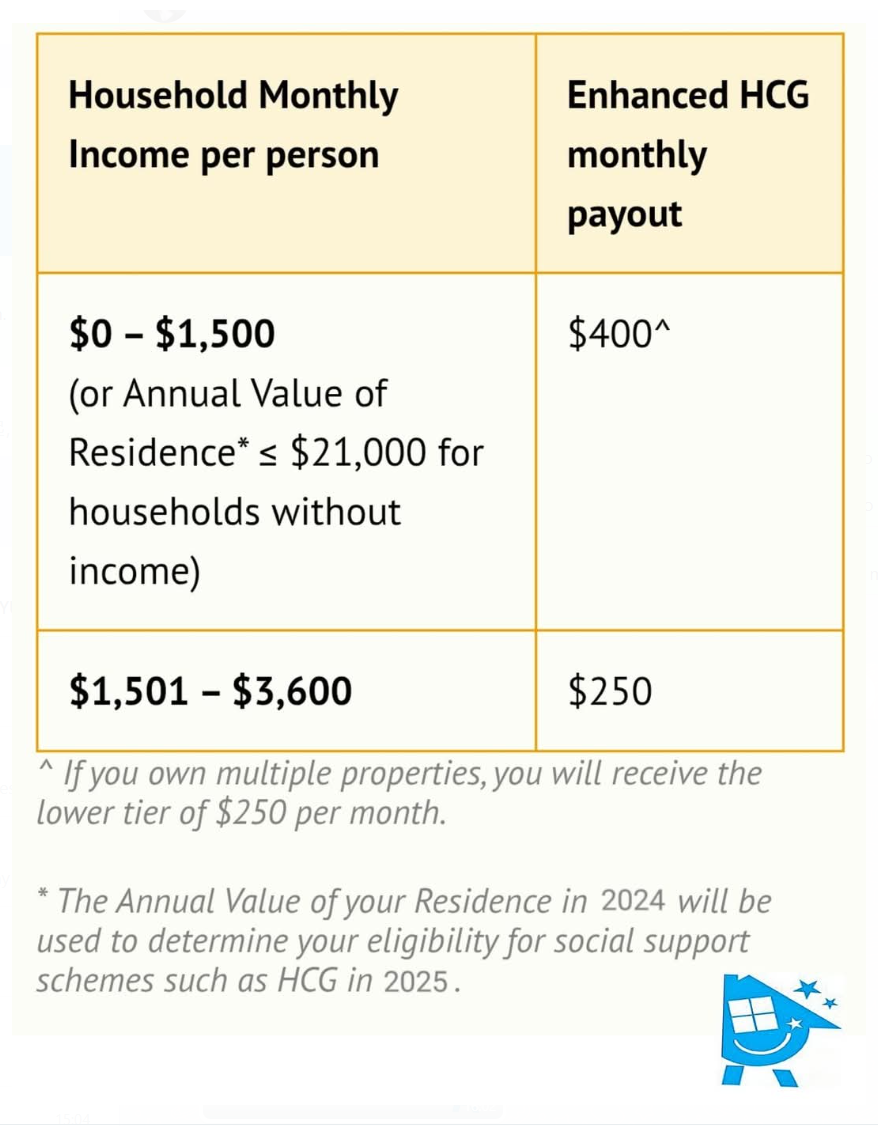
The Home Caregiving Grant (HCG) has been enhanced, with monthly payouts of up to $400 per month. In recognition of caregivers’ contributions and further reduce caregiving costs.
To be eligible for the Home Caregiving Grant, the care recipient must be a citizen or Singapore permanent resident who is also living in the same household as the applicant and not in a residential long-term care institution such as a nursing home.
The applicant will also need to be Means-Tested by the Ministry of Health to show that their household monthly income is less than $2,800 per person, or that their annual value of the property¹ is $13,000 or less.
Please refer to the table below for more information.
How to Qualify Home Caregiving Grant in Singapore
To be eligible for Home Caregiving Grant (HCG) in Singapore, the care recipient must meet the following criteria:
Nationality
- Must be a Singapore Citizen; or
- Permanent Resident (with a parent, child or spouse who is a Singapore Citizen)
Lives in Singapore
Means Tested
- Household monthly income per person is $3,600 or less; or
- Annual value of property for household without income is $21,000 or less
- Those with multiple properties will receive the lower HCG payout of $250 per month
Not in a Residential Long-term Care Institution (e.g. nursing home)
Requires Assistance with Activities of Daily Living
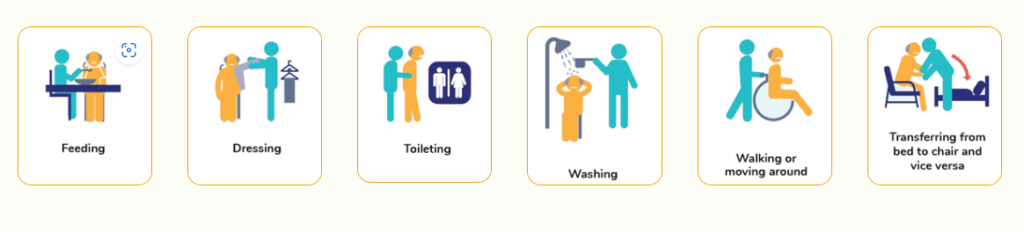
Permanently requires some assistance with at least three of the six Activities of Daily Living. These six activities are:
- Feeding
- Dressing
- Toileting
- Washing
- Walking or moving around
- Transferring from bed to chair and vice versa
3. Introduction to Pioneer Generation Disability Assistance Scheme
If you are qualified for HCG and Born before 31 December 1949, you will be able to obtain The Pioneer Generation Disability Assistance Scheme (PioneerDAS). This scheme is part of the Pioneer Generation Package, which honours what Singapore’s Pioneers have done for the country. Under this scheme, Pioneers who have disabilities can receive $100 a month, which they can use for expenses.
How to Qualify
To be eligible for PioneerDAS, the care recipient must meet the following criteria:
Lives in Singapore
Requires Assistance with Activities of Daily Living
Summary
A little bit of help can go a long way when caring for your loved one at home. The Home Caregiving Grant can be used to offset the costs of home care services, allowing you peace of mind and quality time with your loved one.
The Ministry of Health (MOH) will implement the Home Caregiving Grant (HCG) to provide more financial support for caregiving in the community. Caregivers can also shorten the activation time to access respite care through Go Respite, a new pilot pre-enrolment system.
These are part of the Caregiver Support Action Plan announced by MOH in February 2019. The Action Plan strengthens support for caregivers in areas such as caregiver respite care, financial support and care navigation.